
Composite Bonding
Composite bonding uses tooth-coloured resin to transform discoloured, crooked or damaged teeth.

Composite bonding offers numerous benefits making it an attractive option for those looking to enhance their smiles. Here are some of the key advantages:
- Improved Aesthetics: Composite bonding can transform the appearance of teeth by covering stains, discolourations and imperfections. Whether you have chipped, misshapen, or unevenly-spaced teeth, composite bonding can create a more attractive smile.
- Minimally Invasive: Unlike some other cosmetic dental procedures, composite bonding is minimally invasive. It requires very little, if any, removal of tooth structure, making it a conservative option that preserves your natural teeth.
- Quick and Convenient: Composite bonding can often be completed in a single dental appointment. This means that you can achieve a dramatically improved smile without the need for multiple visits.
- Affordable: In comparison to more extensive cosmetic treatments like dental veneers or crowns, composite bonding is a cost-effective route to a beautiful smile. How much does composite bonding cost? Check out our private dental prices.
- Natural Appearance: Composite resin closely mimics the appearance of natural tooth enamel. The dentist can custom-match the resin's shade to your natural teeth, ensuring that your bonded teeth look indistinguishable from the rest of your smile.
- Durability: While composite bonding may not be as long-lasting as some other treatments, it can still provide several years of service with proper care and maintenance. Touch-up and repairs can be performed as needed.
- Versatility: Tooth bonding can be used for a variety of purposes, including repairing chips and cracks, filling gaps between teeth, and even covering exposed tooth roots in cases of gum recession.
- Less Sensitivity: Since composite bonding is a less invasive procedure, it is often associated with less post-treatment sensitivity compared to more aggressive dental treatments. In other words, the recovery time is quicker.
- Stain-Resistant: Composite resin is relatively resistant to staining from the usual culprits such as coffee, tea and nicotine. However, it is still important to maintain good oral hygiene to preserve the appearance of your bonded teeth.
Is it Right For Me?
It may not be suitable for everyone. To determine if composite bonding is the right option for you, it is essential to consult with a qualified dentist who can assess your oral health and discuss your aesthetic goals.
In some cases, more extensive dental work such as veneers or crowns may be necessary to address specific issues. Also, patients with significant orthodontic concerns may require orthodontic treatment to correct alignment problems before pursuing cosmetic procedures like composite bonding.
Your best bet is to phone our Glasgow practice and make an initial appointment to discuss your options with Dr Murphy or one of the other dentists,
What Exactly is Composite Bonding?
Composite bonding as offered in our Glasgow practice is a cosmetic dental procedure designed to improve the aesthetics of your teeth. It involves the application of a tooth-coloured composite resin material to teeth that are discoloured, misshapen or damaged. The resin is carefully sculpted and bonded to the tooth's surface, creating a natural and seamless appearance.
Patient Reviews
"Got my teeth whitened and bonded they look and feel brilliant will definitely be back." Andrew Bowers
"Couldn't recommend Appletree Dental Care higher. They are brilliant at both composite bonding and cosmetic dentistry and will defiantly use again. Thanks to Brendan and the team for making the experience smooth and flawless." Google review
How Does it Work?
The process of composite bonding typically begins with a free consultation at our Glasgow dental surgery. One of our dentists will assess your oral health, discuss what you are looking for, and determine if resin bonding is the right solution for you. Once we've agreed a treatment plan, the actual bonding procedure can begin.
Here’s a quick overview of the steps involved in the composite bonding process:
- Preparation: Your dentist will start by selecting a shade of composite resin that closely matches your natural tooth colour. This ensures the bonded teeth will blend seamlessly with the rest of your smile.
- Colour Matching: Next, the dentist will carefully select a shade of composite resin which closely matches your natural tooth colour. This ensures a seamless and natural-looking result.
- Tooth Preparation: Unlike more extensive procedures like veneers or crowns, composite bonding typically requires minimal tooth preparation. In most cases, the dentist will lightly roughen the surface of the tooth to create a better bonding surface for the composite resin.
- Application of Composite Resin: Once the tooth is prepared, Dr Murphy applies the composite resin to the affected area, sculpting and shaping it to achieve the desired appearance and taking into consideration factors like tooth size, shape, and alignment.
- Curing and Polishing: A special light is used to harden the resin, ensuring it adheres securely to the tooth. After the resin has set, your dentist further shapes and polishes it to blend seamlessly with the surrounding teeth. This final step gives the tooth a smooth and natural finish.
- Final Adjustments: The dentist may make final adjustments to ensure the bite feels natural and comfortable for you. This step is crucial for a successful outcome.
Composite Bonding with Other Cosmetic Dental Treatments
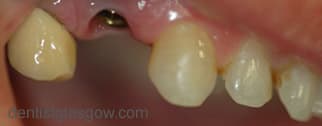
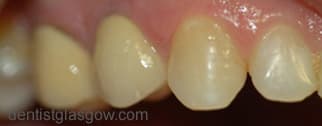
Sometimes composite bonding forms just part of a cosmetic dentistry treatment plan as is the case with this Glasgow patient.
Here we can see they have received an implant crown on top of a dental implant and shortly afterwards Dr Murphy has used composite resin to tidy up and reform their adjacent teeth. The patient was delighted with the end result.
Composite Case Studies
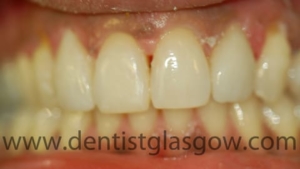
Brown Lateral Incisor Covered with a Porcelain Veneer
An old orthodontic retainer had de-bonded causing drifting of front teeth. Zara also had a brown tooth. We solved this with composite bonding and a porcelain veneer.
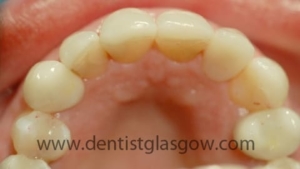
Cosmetic Dentistry Treatments Case Study: Marion’s Story
Marion had several different cosmetic dentistry issues including chipped teeth and dark and stained teeth.
Frequently Asked Questions
What Happens During Composite Bonding?
We begin by assessing the issue with you — whether you want to repair a damaged tooth, close a gap, or improve the shape of a front tooth. Once we’ve agreed on a solution, we apply the composite resin directly to your teeth and sculpt it to blend seamlessly with the surrounding enamel. Once you’re happy with the appearance, we harden the resin and polish it to a smooth finish.
Does Composite Bonding Hurt?
No. It doesn’t even require anaesthetic — although we’re happy to make adjustments for particularly nervous patients.
How Long Does It Take?
That depends on the size of the problem, but composite bonding is often completed in a single appointment of less than an hour. You can discuss this with Dr Murphy at your initial consultation.
Can I Whiten My Teeth with Composite Bonding?
Teeth whitening doesn’t affect composite resin — but we can still whiten your natural teeth. It’s important to let us know in advance so we can match the resin to your new, brighter smile.
How Long Will My Composite Bonding Last?
With proper care, composite bonding can last at least six or seven years — and often much longer. If it does wear down over time, we can usually replace or repair it easily.
What About Aftercare?
Once the resin has hardened, it’s durable — but not as strong as natural tooth enamel. Avoid biting or chewing anything very hard, and stick to a normal dental care routine: brushing, flossing, and regular check-ups.